

The Tragic Death of Charlie Kirk: On September 10, 2025, America witnessed a terrible act of political violence: Charlie Kirk, the prominent conservative activist, was shot and killed while speaking at Utah Valley University (UVU) in Orem, Utah. He was 31. His death has sent shockwaves across political lines, raising serious concerns about the climate of public discourse in the United States.
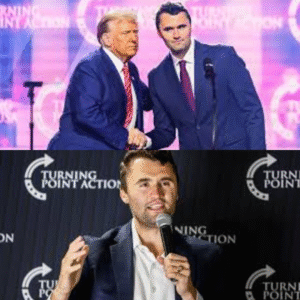
Who Was Charlie Kirk?
Charlie Kirk was more than just a media personality. He co-founded Turning Point USA in 2012, at a very young age, to organize conservative students on high school and college campuses. Over the years, he became a major force in conservative youth politics, organizing events, debates, podcasts, and social media campaigns that drew a large following. He also became closely aligned with Donald Trump and frequently appeared in political commentary and the media. His “Prove Me Wrong” debates, setting up a table and inviting audience members to challenge him on political and cultural issues, were some of his signature public events.
What Happened on September 10:
The fatal incident occurred during one of Kirk’s public appearances, part of what he called the “American Comeback Tour.” The event was hosted outdoors at UVU, with thousands present. Kirk was seated at a debate table, his “Prove Me Wrong” setup, fielding questions from students in the audience. One question came regarding the number of mass shootings over the past decade. After he replied, “Including or not including gang violence?”, a single shot rang out. He was struck in the neck, likely near his carotid artery.
Witnesses describe chaos breaking out immediately—people ducking, running, screaming. Video footage from the scene shows blood and confusion. Security rushed Kirk to Timpanogos Regional Hospital in critical condition. Tragically, he did not survive. He was pronounced dead later that same day.
Suspect and Investigation:
Authorities believe the shot was fired from a nearby rooftop, possibly the roof of a building on campus. There have been reports of a “person of interest” and good video surveillance capturing suspicious activity, but as of now, no confirmed perpetrator has been identified. Two individuals arrested in an early sweep were later released after investigators concluded they were not connected to the attack. Law enforcement—local, state, and federal continuing the investigation. The weapon is reported to have been a high-powered, bolt-action rifle.
Reaction: A Nation Reels
The killing of a public figure in such an open campus setting has unnerved many. Political leaders on both sides condemned the attack. President Donald Trump, governors, senators, and even opponents of Kirk in political discourse expressed sorrow and called for unity against political violence.
Utah’s governor described the event as a political assassination. Questions are being asked not only about who did this and why, but also about how safe public political discourse remains in America. For many, Charlie Kirk’s death is part of a worrying trend of violence intersecting with politics—threats, shootings, and hostility becoming more common when political beliefs clash.
Legacy and the Aftermath:
Charlie Kirk left behind more than ideologically aligned followers; he had a family—his wife, Erika, and two young children. He was known for being outspoken, polarizing, inspiring, and provocative. Whether people agreed with him or not, many saw in him someone who engaged in the public square actively, turning debates into spectacles and creating platforms for young voices.
His death has ignited discussions about free speech, campus safety, gun control, and extremism in America. Many are calling for stronger protections for public figures, especially at events that involve political or ideological opposition and debate. Others are lamenting what this says about the turning point of civility and safety in the civic life of the nation.
Why This Matters:
-
Political Violence as Fearful Reality: This incident shows that political violence isn’t an abstraction—it can happen anywhere, even in educational settings, even during a live debate.
-
Chilling Effect on Debate: The “Prove Me Wrong” style that Kirk championed depends on open, direct challenges in public. If speakers fear physical reprisals, that kind of engagement could suffer.
-
National Unity Under Stress: Leaders calling for calm, investigation, justice—these are important signals. But many fear that reactionary rhetoric could deepen divides, especially when discourse becomes about “us vs them.”
-
The Role of Youth and Campus Politics: University campuses have long been ground zero for ideological battles. That a political speaker could be killed while engaging with students underscores how volatile that ground has become.
The death of Charlie Kirk marks a dark moment in recent American political history. It is a reminder of how fragile and volatile civic spaces can be when the temperature of political polarization rises. The full story—who carried out this shooting and why—remains under investigation. Yet regardless of that outcome, the impact is already clear: a loss of life, a grieving family, a movement of young activists shaken, and a nation forced to confront once more the danger of violence in public political life.
Charlie Kirk’s final words, his manner of public engagement, and even his style will be remembered. But his death raises urgent questions: about safety, about responsibility, about how each person in our society can contribute to preventing such tragedies in the future.
ऐसे और भी Global लेखों के लिए हमारे साथ जुड़े रहें! Khabari bandhu पर पढ़ें देश-दुनिया की ताज़ा ख़बरें — बिज़नेस, एजुकेशन, मनोरंजन, धर्म, क्रिकेट, राशिफल और भी बहुत कुछ।